

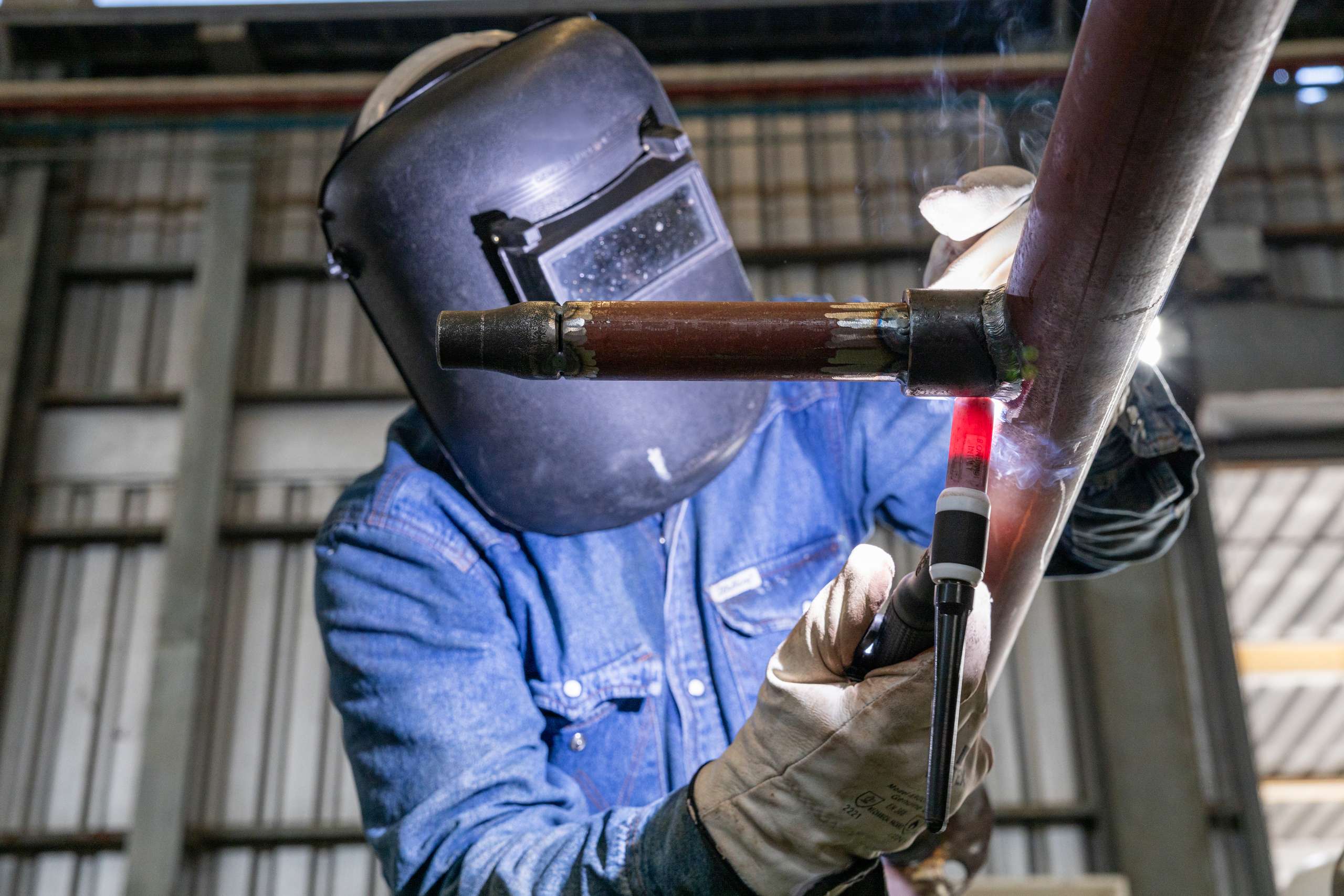
Here is how to slice up welding into little drills that make a difference: If you’re a new welder, there’s a good chance that long beads are giving you a false sense of progress. When you’re welding for an extended period of time, it’s easy to produce a bunch of sparks, join some metal, and fill up your workbench with parts. But if you’re a new welder, you’re probably not paying enough attention to the details, and your welds all end up looking the same. In most cases, this is because you’re trying to practice too many skills at the same time.
Welding requires dexterity in your hands, attention in your eyes, positioning of your body, sensitivity to heat, and a sense of timing all at the same time. When you try to practice all of these skills together from the outset, you can’t distinguish between them. It would be better to break the skill of welding down into shorter drills that allow you to focus on one element at a time. With each drill, you should be able to feel when you’re making a change, and judge whether or not that change had the desired effect. One idea for a simple drill would be to practice moving without welding at all.
Line up a piece of scrap, assume your welding stance, and run your torch along the path where you intend to lay a bead without actually starting the arc. Notice whether your wrist is tensed up in certain places, whether your arm is supported in others, and whether you can move your body comfortably from the beginning of your weld to the end. This might sound like an absurdly basic drill, but it’s necessary because uncomfortable positioning is an easy trap to fall into. A bad bead often starts with an uncomfortable motion before the arc was even lit. Once you’ve rehearsed your motion and feel like you can move comfortably, try laying down a bead and see what it looks like.
It’s helpful to connect the motion drill with an actual welding drill because it provides a way to physically practice an otherwise abstract concept. It’s easy to conceptualize the idea that you need to adjust your body positioning, but when you provide a way to physically rehearse that concept, it helps the lesson sink in. Another idea for a simple drill might be to practice your starts and stops. When inexperienced welders make long welds, they tend to focus their attention on the middle of the bead, and hope that the start and stop will take care of themselves. This almost never works. Bad starts can easily cause you to build up too much material, and bad stops can easily leave you with a weak or ugly finish. So grab a fresh piece of scrap, and practice starting your weld over and over again, stopping after about an inch. Then turn around and practice stopping your weld the same way.
A very common error that I see people make when they’re practicing their starts is that they try to compensate for a bad start by speeding up as soon as possible. This usually only makes the beginning of the weld worse. Instead, slow down and make sure you’re in a solid stance. Watch as you establish a good puddle, and allow your first movement to be deliberate rather than frantic. You could also create a drill that focuses on travel speed. On a flat piece of scrap, use a piece of chalk or a soapstone to draw two parallel lines. Then run a bead on each line, and try to maintain a consistent width and surface texture. If one bead ends up looking tall and stacked, and the other bead looks short and thin, that tells you something.
It means that you’re allowing your travel speed to vary more than you realize. Rather than making longer beads, shorten the distance you’re welding and try again until you get a bead that looks consistent from top to bottom. One of the reasons that welding improves is that your hand learns a rhythm that it can maintain, and it’s easier to find that rhythm if you’re only making short beads. If you’re welding long distances, it’s easy to start off well and deteriorate as you go. If you only make short beads, you never get a chance to deteriorate. A good length of time to practice one of these drills is 15 minutes. In the first couple of minutes, decide what you want to focus on (for example, you might want to focus on your starts or your travel speed), and set up enough scrap to practice that thing several times.
Use the bulk of your time to make four or five separate attempts at your chosen drill, and stop after each attempt to evaluate your work. But only evaluate the specific thing you’re practicing. In the last few minutes, try to repeat the best attempt you made, and attempt to recreate the feeling in your hands, your stance, and your line of sight. The last part is important because the goal of practicing a drill isn’t just to remove a flaw. It’s also to learn what a successful weld feels like so that you can recreate it in the future. Little drills like this make practicing welding easier because they help you understand what you’re doing.
Rather than coming away from a practice session just feeling like you made some good welds and some bad welds, you come away from a practice session knowing what you practiced and what you changed. That sort of clarity helps you develop better welding habits than aimlessly welding for a while ever could. As a beginning welder, you don’t need to tackle bigger and better things. You just need to learn how to identify one flaw, patiently drill it out, and give the correction enough repetitions to become a habit.