

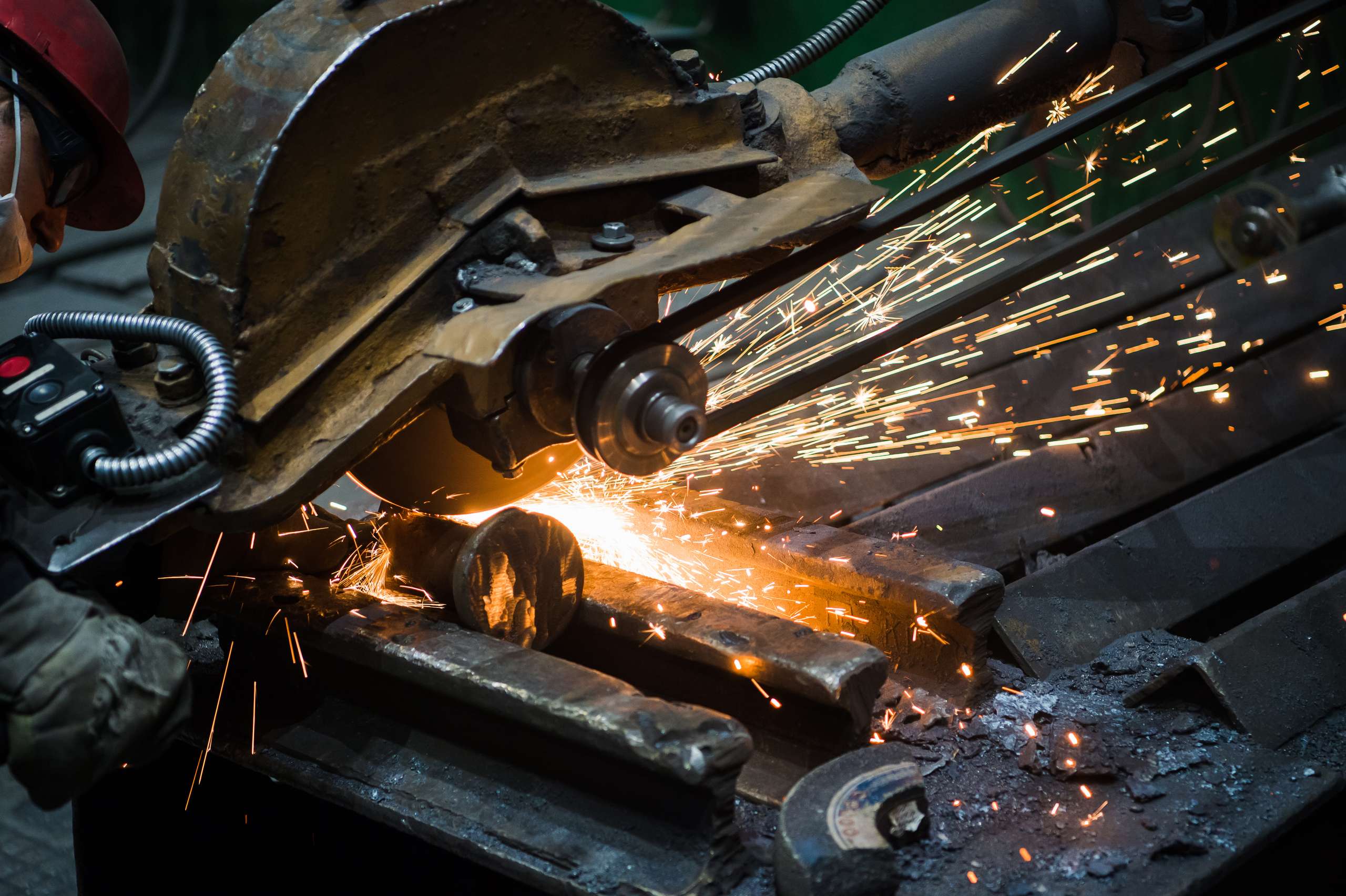
The weld looks fine. No, it doesn’t. Yes, it does. But in this light, it looks like crap. As a beginning welder, it’s hard to judge fresh welds. You can’t see all the details when you’re making the weld, and when you can, it’s easy to misinterpret them. So how do you know how you’re doing and what you need to work on? Good feedback starts with understanding what to look for in a finished weld. Instead of asking, “is this a good weld or a bad weld?” try to pick apart smaller details. What is the bead width like? Is the edge profile consistent? How smooth is the surface?
Does the bead sit consistently in the joint? And so on. What I find particularly useful as a beginner is to compare only a few welds at a time. Make three welds, a few inches long, on the same piece of clean scrap, with the same settings, and under the same conditions. Try to avoid changing the heat mid-weld unless there is something wrong. Allow them to cool, and then place them side by side and look at the differences. One will be a bit narrower than the other. One has more spatter than the others. One looks more uniform from one end of the weld to the other.
This tells me a lot more than making ten quick welds and trying to remember the difference between them. Feedback is most useful when it can be tied to an action I performed recently enough that I remember the feel of it in my muscles. Getting (and giving) vague feedback When asking for feedback or giving feedback to someone else, one of the most common mistakes is being too vague. Telling me that my weld is sloppy doesn’t tell me anything useful. Instead, telling me that my bead is wider in the middle, or that the weld is higher at the start than the rest of the weld, or that the edges don’t flow smoothly into the parent metal, etc., does.
Those things offer a way for me to correct the problem. If the bead is wider in the middle, perhaps I’m moving too fast, or my torch is at an inconsistent angle. If my starts are ugly, I should practice only the first inch of the weld on new scrap. I should repeat that a dozen times until I have a consistent motion. Feedback that tells me my weld is a mess does not. Visual and physical feedback There is one further bit of feedback I find very useful. And that is separating visual and physical feedback.When I pause and ask myself those questions after a short weld, I get a sense of what I can improve. Welding is as much about observing the metal after the arc is extinguished as it is about paying attention to when you lose control during the weld. The more I can tie feeling to the weld, the easier it is to repeat good behavior.
Creating a practice plan One last trick for making feedback useful is to have a practice plan. Spend fifteen minutes working on one specific feature, such as keeping the bead the same width across the entire pass. In the first few minutes, I clean up my metal and decide exactly what I’m going to look for in my weld. Then, I lay down three beads, stopping after each one to look at that particular feature. In the final minutes, I repeat the pass with one correction in mind, such as moving more consistently, or keeping a more consistent torch angle.
That prevents feedback from being overwhelming. It also makes each practice session into a mini-experiment instead of a series of random arcs. Conclusion Good feedback should always leave me with a clear idea of what my next weld should look like. It should help me identify a single flaw, consider the probable cause, and suggest a single change to my behavior to correct it, while holding everything else constant. That’s how I make progress. That’s how I build the muscle memory that leads to consistent, quality welds.